Saturday, August 6, 2011


A COMMENTARY ON
THE DIVINE LITURGY
   Introduction
The Divine Liturgy is divided into three parts:
1. The “Proskomidi”, or preparation of the Holy Gifts. (Not visible to the Faithful).
2. The “Liturgy of the Catechumens”, (the students or learners of the faith).
3. The “Liturgy of the Faithful”, (Sacrament of the Holy Eucharist).
Priest prepares the Holy Gifts during the Prothesis
THE PROSKOMIDI 
or OFFICE of the OBLATION
The Priest, fully vested Click to Learn more about the Priest’s Vestments proceeds to the Table of Preparation called “PROTHESIS” or “PROSKOMIDI”. The Prothesis Table is always located inside the sanctuary and usually on the wall to the left of the Altar Table. The PROSKOMIDI is the preparation of the Holy Gifts, the Bread and Wine for the Divine Liturgy. (The Prothesis depicts the birthplace of Our Lord Jesus). READ MORE

Thursday, August 4, 2011

عيد التجليتحتفل الكنيسة  الأرثوذكسية بالتجلي في 6 آب. يدعو العامة هذا العيد بعيد الرب وهذه التسمية لها اساسها العميق : يسوع المسيح ربنا وإلهنا . ففي التجلي ظهر لنا المسيح كإله ممجد, وأثبت لنا في تجليه جوهره الأساسي , الإله الممجد . قبل حدث التجلي هيأ المسيح تلاميذه لهذه الرؤيا بقوله ” إن قوماً من القائمين ههنا لن يذوقوا الموت قبل أن يروا ملكوت الله آتياً بقوة ” .فمشهد التجلي هو لقطة خاطفة للمجيء الثاني وهو ما يسميه الآباء اليوم الثامن وهذا هو الملكوت الذي طالما تحدث عنه المسيح .قراءة : متى 16-: 28—-17: 1 – 13مجد الرب يتراءى لموسى في العهد القديم :في القرن الثالث عشر قبل الميلاد وفي برية سيناء استدعى الرب موسى إلى الجبل ليعطيه الشريعة على لوحتين حجريين – موسى هذا النبي العظيم الذي شق البحر الأحمر وقاد شعب الله من مصر وتاه به عبر الصحارى 0 لبى موسى دعوة الله وصعد إلى الجبل وفجأة غمرت الغمامة الجبل ومجد الرب استقر عليه,  ناداه الرب من وسط الغمامة وكان منظره كنار آكلة , فاقترب موسى ودخل في الغمامة وبقي 40 يوما وأربعين ليلة ( خروج 24 : 12 – 18 )طلب موسى من الرب أن يظهر لـه مجده فأجابه الله “…. لا تستطيع أن ترى وجهي لأنه لا يراني إنسان ويعيش … قف على هذه الصخرة وإذا مر مجدي أظللك بيدي حتى أجتاز ثم أزيل يدي فتنظر قفاي وأما وجهي فلا يرى ” .( خروج33 : 21 و 22 )  وهكذا فعل الرب , فمر قدامه قائلاً : ” الرب إله رحيم ورؤوف ، طويل READ MORE
The Transfiguration of Christ
By Archbishop Dmitri of Dallas and the South
The Transfiguration of Christ is recorded in the first three Gospels (Matthew 17:1-9; Mark 9: 2-9; Luke 9: 28-36). The fourth does not contain an account of the event, but its author, being one of the three witnesses, is probably referring specifically to it when he says: And the Word was made flesh, and dwelt among us, And we beheld His glory, the glory as of the only begotten of the Father, full of grace and truth (1:14). The holy Apostle Peter also recalls his (as well as James’ and John’s) presence with the Lord on Mt. Tabor: (we) were eyewitnesses of His majesty. For He received from God the Father honor and glory, when there came such a voice to Him from the excellent glory, This is my beloved Son, in whom I am well pleased. And this voice which came from heaven we heard, when we were with Him in the holy mount (II Peter 1:16-18).
All three Gospel accounts agree in the details of the event as well as its following the rather crucial conversation between Jesus and the disciples on the road to Caesarea of Philippi. The Lord seems to have wanted to get certain matters of great importance clear in the minds of His followers before He entered into His priestly ministry. 1) In answer to His question, Whom do men say that I the Son of Man am? we have

Wednesday, August 3, 2011

 تجلي الرب يسوع
17: 1-9 -النص:
1 وَبَعْدَ سِتَّةِ أَيَّامٍ أَخَذَ يَسُوعُ بُطْرُسَ وَيَعْقُوبَ وَيُوحَنَّا أَخَاهُ وَصَعِدَ بِهِمْ إِلَى جَبَل عَال مُنْفَرِدِينَ. 2 وَتَغَيَّرَتْ هَيْئَتُهُ قُدَّامَهُمْ، وَأَضَاءَ وَجْهُهُ كَالشَّمْسِ، وَصَارَتْ ثِيَابُهُ بَيْضَاءَ كَالنُّورِ. 3 وَإِذَا مُوسَى وَإِيلِيَّا قَدْ ظَهَرَا لَهُمْ يَتَكَلَّمَانِ مَعَهُ. 4 فَجَعَلَ بُطْرُسُ يَقُولُ لِيَسُوعَ: «يَارَبُّ، جَيِّدٌ أَنْ نَكُونَ ههُنَا! فَإِنْ شِئْتَ نَصْنَعْ هُنَا ثَلاَثَ مَظَالَّ: لَكَ وَاحِدَةٌ، وَلِمُوسَى وَاحِدَةٌ، وَلإِيلِيَّا وَاحِدَةٌ». 5 وَفِيمَا هُوَ يَتَكَلَّمُ إِذَا سَحَابَةٌ نَيِّرَةٌ ظَلَّلَتْهُمْ، وَصَوْتٌ مِنَ السَّحَابَةِ قَائِلاً:«هذَا هُوَ ابْني الْحَبِيبُ الَّذِي بِهِ سُرِرْتُ. لَهُ اسْمَعُوا». 6 وَلَمَّا سَمِعَ التَّلاَمِيذُ سَقَطُوا عَلَى وُجُوهِهِمْ وَخَافُوا جِدّاً. 7 فَجَاءَ يَسُوعُ وَلَمَسَهُمْ وَقَالَ: «قُومُوا، وَلاَ تَخَافُوا». 8 فَرَفَعُوا أَعْيُنَهُمْ وَلَمْ يَرَوْا أَحَداً إِلاَّ يَسُوعَ وَحْدَهُ. 9 وَفِيمَا هُمْ نَازِلُونَ مِنَ الْجَبَلِ أَوْصَاهُمْ يَسُوعُ قَائِلاً:«لاَ تُعْلِمُوا أَحَداً بِمَا رَأَيْتُمْ حَتَّى يَقُومَ ابْنُ الإِنْسَانِ مِنَ الأَمْوَاتِ».
:الشرح

هل الخوف نعمة أو نقمة؟


  بقلم: الأب انطونيوس مقار إبراهيم

 كي يتسنى لنا التأمل في هذا الموضوع علينا أن نطرح بعضاً من الأسئلة التي ربما تفيدنا في حياتنا: ما هو الخوف؟ وكيف نتخلص منه؟.. وما هو الفرق بين الخوف والمخافة؟ وهل هناك ما يسمى خوف إيجابي وخوف سلبي؟ أو بمعنى أخر: هل من خوف نافع وخوف ضار؟.. وهل هو مرض أم تقوى؟.. نعمة أم نقمة؟ هل هناك مواعيد من الله تطمئنا عند خوفنا؟.. كثيرةٌ هي الأسئلة والأفكار التي تجول في خاطري وخاطر البعض منكم حول موضوع الخوف. وأريد أن أطمئنكم كما أطمئن ذاتي بما قاله المرنم في المزمور “الرب نوري وخلاصي فممن أخاف؟” (مز4:23).

Monday, August 1, 2011


St. Theophan the Recluse On Prayer


From the Letters of Bishop Theophan the Recluse (Feast Day January6th.)

The Art and Science of Prayer (from Letter 15)

You write that you prayed fervently and at once you were calmed, receiving an inner assurance that you would be released from oppression; and then, indeed, it was so....
Recall how you prayed and always strive to pray this way, so that prayer comes from the heart and is not just thought by the mind and chattered by the tongue.
I won't conceal the fact that, though once you prayed from the heart, it is hardly possible to pray that way constantly. Such prayer is given by God or is inspired by your Guardian Angel. It comes and goes. It does not follow, though, that we should give up the labor of prayer. Prayer of the heart comes when one makes an effort; to those who do not strive, it will not come. We see that the Holy Fathers made extraordinary efforts in prayer, and by their struggles they kindled the warm spirit of prayer. How they came to this prayerful state is illustrated in the writings they have left us. Everything they say about striving in prayer makes up the science of prayer, which is the science of sciences. The time will come when we will study this art [see the classic work The Art of Prayer (Faber & Faber)—webmaster]. But now, since it came up in our correspondence, I touch on it only in passing. Let me add: There is nothing more important than prayer; therefore, our greatest attention and most diligent attention must attend it. Grant us, O Lord, zeal for such an effort!  
READ MORE

Sunday, July 31, 2011


( صوم السيدة )

صوم السيدة العذراء هو من الاصوام المهمة والمحبوبة لدى فئة كبيرة من المسيحيين الممارسين مسيحيتهم ويكاد يقال أن لشعب المؤمن هو الذي وضعه وفرضه على روزنامة الكنيسة لانه حتى القرن الحادي عشر لم يكن ضمن الاصوام المعمول بها بحكم القانون الكنسي ، كما لا نجده في أي قانون من قوانين الصوم وكان هذا الصوم معروفا بالصوم العذراى ويعتبرونه كسند للطهارة والتبتل لهذا اكثر ما يصومه هم المتنسكون والرهبان وهكذا بات الشعب يمارسه على كافة المستويات جاعلا منه مناسبة للتجديد الحياة الروحية وفرصة للتوبة وجعل مريم العذراء من هذا الصوم ليس المثل الحي للطهارة والتبتل بل الشفيع المؤتمن لنوال القوة والنعمة من الله لسلوك هذه الحياة 0
.....READ MOREإذا سر هذا الصوم يكون في شفيعته فالعذراء شفيعة مقتدرة لكل من يلتجئ اليها لجؤ الايمان والر

Saturday, July 30, 2011


The Fast of the Dormition of the Holy Theotokos

 For the first fourteen days of August during each year, the Holy Orthodox Church enters into a strict fast period in honor of the Mother of God, the Virgin Mary. The eminent Orthodox theologian, Father Sergei Bulgakov, beautifully expresses the high regard which the Orthodox Christians have for the Blessed Virgin Mary, the Mother of God, for her special role in the salvation of mankind, when he affirms, “The warm veneration of the Theotokos is the soul of Orthodox Piety.” St. John of Damascus, one of the great Orthodox fathers, pointed out that when the Blessed Virgin Mary became the Mother of God and gave birth to Christ, the Redeemer of Mankind, she became the mother of mankind. We call the Virgin Mary “Theotokos”, from the Greek, which means “The Birth-Giver or the Bearer of God.” This is the highest title that can be bestowed upon any member of the human race.
The Theotokos, the Virgin Mary, was “blessed amongst women,” and she was chosen “to bear the Savior of our souls.” We, therefore, as Orthodox Christians, consider her to be the Queen of all the saints and the angels.
Knowing that she holds such a high place in the Kingdom of Heaven and that she is eternally present at the throne of God interceding for mankind, we, as good Orthodox Christians, must pray for her love, guidance, and  READ MORE

Friday, July 29, 2011

FEASTDAYS AND SERVICES TO THE THEOTOKOS

Presentation Given by His Grace Bishop Demetri
Ever since the Archangel Gabriel first said, "you are blessed among women," to the Virgin Mary, these words of praise have inspired the faithful of the Christian Church. Their love for Christ, and desire to honor all that He honored has led them to also praise His glorious Mother. Thus they continue to fulfill the words of the Holy Spirit spoken through her, "behold, from henceforth all generations shall call me blessed" (Lk. 1:45). The Church has honored the Most Holy Lady in many ways. Theologians have defended her doctrinally and theologically. Authors have composed hymns dedicated to her. The faithful have sought her intercession in their prayers. Finally, the entire Church has celebrated feast days commemorating certain events in her life or miracles performed through her mediation. After the Council of Ephesus (431 AD), however, the number of hymns and services to the Theotokos increased and flourished. All feast days seem to have their historical foundations during or after this great Council, which defended the doctrine of the Person of Christ and the dignity of the Mother of God.
During and after the establishment of the feast days of the Theotokos clergy and laity emphasized her praise through hymns written in her honor. The most famous work of this kind is the Akathist Hymn, a Kontakion written by the 6th century deacon, St. Romanos the Melodist. The Paraclesis is another poetic work dealing with another aspect of veneration of the Virgin, her role as Protectress of Christians. Orthodox use this service, instituted almost 1000 years after Romanos wrote his Kontakion in times of trouble and temptation. Both services are in general use in Orthodox churches today. It is then the purpose of this presentation to deal with these forms of piety which have taken deep root in the Orthodox Catholic conscience, to trace their beginnings where possible, and to demonstrate their relevance for us today.READ MOREhttp://almoutran.com/2011/04/2953

Thursday, July 28, 2011

حول الانفصال عن الله: مختارات من البوق الإنجيلي 
مكاريوس معلّم باتموس 
نقله إلى العربية الراهب أثناسيوس الدمشقي
       إنني قد طالعت كتاب أعمال الرسل فوجدت فيه كلاماً مسطراً عن بولس المطوّب. أنّه لما عزم على السفر من كورنثوس، سبّب للمؤمنين تأسفاً على فراقه وتحسراً عظيماً، وجلب عليهم غماً وألماً جسيماً.
حتى أنهم انطرحوا منكبّين على عنقه، وطفقوا يطلبون إليه ببكاء جزيل وعبرات غزيرة، ألاّ يدعهم خائبين من مشاهدته. فوعدهم بحضوره لعندهم. فبالنسبة إلى هذا الأمر اعتبر حالَك أيها الخاطئ التعيس المنكود حظه.
يا ليت شعري إذا كان فراق أحد الرسل قد أضرم في قلوب المؤمنين نيران الحزن والغم بهذا المقدار، فكيف تكون حالتك إذا انفصلتَ، ونأيتَ، ولا أعني بقولي عن انفصالك من أهلك وأقاربك، ولا عن افتراقك من خلانك وجيرانك، ولا عن مفارقتك للملاك الحافظ نفسك، ولا عن ابتعادك من بقية الطغمات الملائكية، ولا عن انفصالك من مرافقة جمهور الأنبياء،
SYMPOSIUM
CHURCH GROWTH
CHURCH SUPPORT/GIVING (TITHING)
The Responsive
Church Is a Healthy
Church:

Saturday, July 23, 2011


The Pastor: His Role and Responsibilities
Address delivered by
His Grace Bishop Demetri
to the attendees of the Antiochian House of Studies
September 6, 2000 - Ligonier, PA
We have now spent these days together, preparing ourselves in this “House of Studies” for the sole purpose of fulfilling the ministry that God has given to each of us. I have witnessed this week your dedication to serve God through His calling for you, and I want to assure you that your efforts are pleasing to Him, because you must be dedicated, zealous, pious, humble, and well-formed in your training to approach the priestly calling . . . to be priests in this third millennium.READ MORE

Thursday, July 21, 2011


The Candles and Their Symbolism

Lit candles and Icon lamps (lampadas) have a special symbolic meaning in the Christian Church, and no Christian service can be held without them. In the Old Testament, when the first temple of God was built on earth the Tabernacle services were held in it with lamps as the Lord Himself had ordained (Ex. 40:5, 25). Following the example of the Old Testament Church, the lighting of candles and of lampadas was without fail included in the New Testament Church's services.
The Acts of the Apostles mentions the lighting of lamps during the services in the time of the Apostles. Thus, in Troas, where Christ's followers used to gather on the first day of the week (Sunday) to break bread, that is, to celebrate the Eucharist, there were many lights in the upper chamber (Acts 20:8). This reference to the large number of lamps signifies that they were not used simply for lighting, but for their spiritual significance.  READ MORE

Tuesday, July 19, 2011


 July 20th  

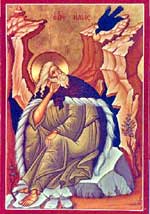
Prophet Elijah (Elias)

 His birth, like the rest of his life, would be marked by fire.
When the Great Prophet Elijah was born at Tishba in the Gilead region of the ancientlandofPalestine, his father Savah witnessed an amazing sight.  While the child lay slumbering in his cradle, a radiant angel of God suddenly flickered into view.  Moving swiftly and soundlessly around the tiny infant, the angelic presence wove a shimmering fabric of fire that completely surrounded him.
Astonished, the fearful father soon noticed an even stranger event: The angel was actually feeding the baby with a flame!  What could this remarkable sequence of events portend?
Although the stricken Savah could not have known it at the time, his son Elijah (around 900-849 B.C.) was destined to READ MORE

20 تموز

النبي ايلياس الغيور :

ولادته ، ككل حياته ، تقترن بالنار
 عندما ولد النبي ايلياس في تشبا ، في ارض جلعاد من فلسطين القديمة  رأى ابوه سافا رؤية بينما كان الصبي في مهده ، اطل ملاك نوراني وراح يطوف حول الطفل وهو يحيك ثيابا من نار احاطت بالصبي من كل جهة .
لما ذهل الاب الخائف ، لاحظ امرا اكثر غرابة : كان الملاك يطعم الطفل لهيب نار ! ماذا يمكن لهذه الاحداث ان تعني ؟ ولئن كان المصعوق سافا لم يكن يعرف ذلك في حينه ، الا ان ابنه ايليا ( 900-948 ق م ) كان مقدرا له ان يكون النبي الاكثر نارية في تاريخ العالم انه شخصية كتابية ( اسمه يعني : يهوه هو الله ) ، كان ايليا يقارع الملوك طوال حياته ، وكان ينذر الامم القوية ان اعظم خطيئة هي الابتعاد عن الله ، وان قصاص الله على الذين يعبدون الاصنام بدل عبادة الاله الحقيقي يتضمن هلاك الوثنيين .READ MORE


The Role of the Theotokos in the Orthodox Church

Midwest Region Spring Delegates Meeting - Spring Valley, IL
April1998  Bishop
Demetri M. Khoury
My task this evening is to address the topic of the Role of the Theotokos in the Orthodox Church. This is not easy, especially in so short a time. We have two thousand years of Church History and two thousand years of the Theotokos’ involvement in that Church History. I certainly am not going to say it all in a few minutes.
Great Lent brings a major change in  our lives. First of all we should be fasting. Christ made it quite clear that we should befasting when He instructed the disciples “when ye fast, be not, as the hypocrites, of a sad countenance: for they disfigure their faces, that they may be seen of men to fast. Verily I say unto you, They have received their reward. Thou, when thou fastest, anoint thy head, and wash thy face; that thou be not seen of men to fast, but of thy Father who is in secret: and thy Father, who seeth in secret, shall recompense thee.”
In addition we are expected to increase our alms-giving, because of the decrease in spending on foods and luxuries. Thus we bring our passions under control through our fasting and we help those who may not have even the barest minimum of food.
There is also a major change in the way we worship and pray. We celebrate the Divine Liturgy of St. Basil the Great on Sundays instead of the Divine Liturgy of St. John Chrysostom. We have the Liturgy of the Presanctified Gifts on Wednesdays and Fridays, and Great Compline on Mondays, Tuesdays and Thursdays. All these services take on a penitential character which is especially reflected in the use of 

Monday, July 18, 2011


Come Forth and be Holy!

 (+In the Name of the Father, and of the Son, and of the Holy Spirit: One God!)
 Priests & Deacons of the Most High God û Come forth! 
         As you know, this is the call with which the Bishop summons the clergy who will partake of the Holy and life giving Body and Blood of Christ.   However, we must understand that this call applies not only for that specific moment in the Divine Liturgy.   Rather, it is the song of Christ to all that would serve Him!   It is the cry with which Christ called forth Lazarus from the dead, saying û Lazarus, Come forth; Come forth into life!   Accordingly, each of us is summoned from the death of sin in order to participate in the holy life of Christ.   As members of the Priesthood we must first have this life in us if we would heal others and bring them from death into life!   READ MORE

LITURGICAL TERMS


AND THEIR DEFINITIONS

 1. ADVENT  -It is of Latin origin, meaning `coming or `arrival, and is used in reference to the coming of Christ at the time of and preparation for His Nativity.
 2. AER – -The largest of the three veils used to cover the diskarion and Chalice.
 3. AKATHISTOS -A Greek word meaning `not permitted to sit’. It is a long hymn composed for devotional purposes to many different saints. The Akathistos for the Theotokos is used during Lent.
 4. ALLELUIA -It is of Hebrew origin, meaning `God has appeared; praise Him’. More simply, it means `Praise the Lord’.READ MORE

Saturday, July 16, 2011


July 19th 

 Theodore, Archbishop of Edessa

He was a terrible student – a fretful and daydreaming child who seemed unable to concentrate on anything.  He was also full of mischief.  One morning, for example, while the local Archbishop conducted services at the Holy Table, he hid beneath the table covering . . . and fell sound asleep!
He was only seven or eight years old at the time (around 790 A.D., according to most Church historians).  But his life was about to be changed forever by a haunting and mysterious dream.
As the naughty boy slumbered beneath the Holy Table on that long-ago morning, he saw a beautiful child walking toward him.  Light danced and shimmered around the tiny newcomer’s head – and when the youthful ..... READ MORE
19 تموز

القديس ثيوذور رئيس اساقفة اديسا

 كان تلميذا رهيبا وفتى حالما بدا عاجزا ان يركز على أي شيء ، وفي صبيحة احدى الايام بينما كان الاسقف المحلي يقيم القداس الالهي ، اختبأ الصبي تحت المائدة المقدسة ، وراح يغط في نوم عميق .
كان في السابعة او الثامنة من العمر في ذلك الحين ( 790 ب م ) بحسب معظم مؤرخي الحقبة ، الا ان حياته تبدّلت الى الابد بعد حلم رهيب وغامض .
عندما غط الصبي في نوم عميق تحت المائدة المقدسة ، في ذلك الصباح الطويل ، راح يرى صبيا يسير باتجاهه ، لقد تراقص النور وسطع على رأس الضيف الجديد ، وعندما حدّق ثيودور الشاب جيدا ، رأى ان الزائر في الحلم كان يحمل بيده هدية .
كانت الهدية كناية عن عسل طازج ... وكانت بين الاثنين خلوة بهية يُقصد منها تشديد الفتى الذي كان يغط في نوم عميق تحت المائدة المقدسة ، قبل ثيودور البركة بسرور ، الا انه فزع عندما تبسّم الصبي بغتة وراح يكلمه بصوت عال .